

Breadcrumbs navigation
Notable Achievement: EPRI Technology Transfer Awards Nomination
The long-standing collaboration between ÚJV Řež and EPRI in ultrasonic testing data processing and the creation of so-called virtual mock-ups has brought further significant recognition. The project, which also uses machine learning and artificial intelligence methods, has been nominated for the Technology Transfer Awards programme. ÚJV Řež, is represented in the nomination by Daniel Dopjera, together with ČEZ.
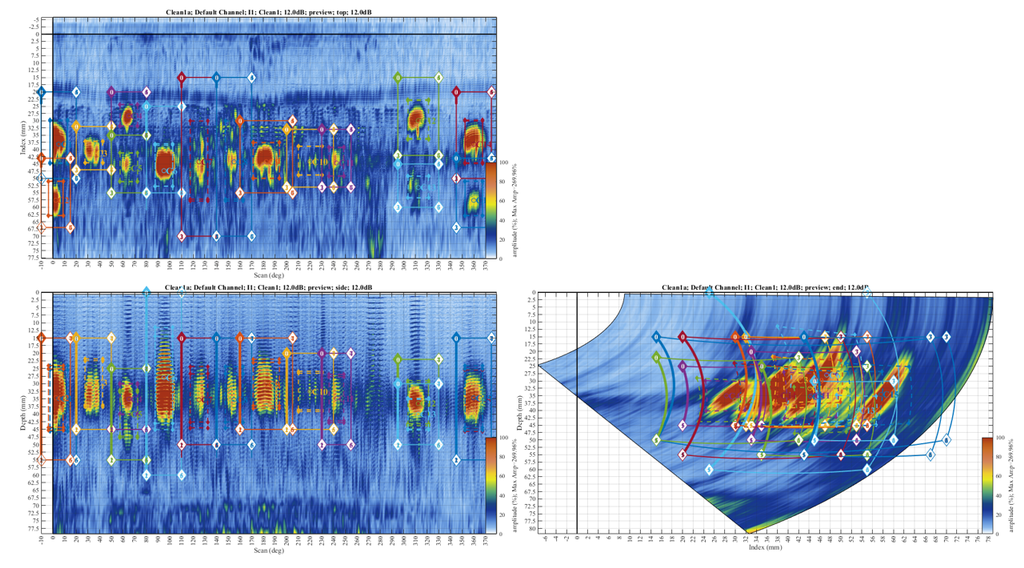
This method of creating virtual flaw responses, or indications, in ultrasonic testing data offers major benefits for power plant operators, as well as for the training and qualification of NDE personnel who carry out ultrasonic examinations in line with ENIQ (European Network for Inspection & Qualification) Recommended Practice 10 – Personnel Qualification. The method enables ultrasonic testing data to be modified, or indications to be implanted, without the need to manufacture physical mock-ups. According to the nomination, the value achieved so far through implementation of this method is approximately USD 3 million, mainly thanks to manufacturing costs that have been saved or deferred. In addition to financial savings, the approach also reduces reliance on physical mock-ups and provides more cost-effective support for personnel qualification, particularly when using PAUT (phased array ultrasonic testing) techniques. The nomination also highlights the innovative approach taken by the project team: the technology was not used merely as software, but was incorporated directly into real workflows. This made it possible to obtain important operational feedback and verify its scalability.
Conventional NDE practice, i.e. the production of physical mock-ups with artificial flaws for individual weld types designed to generate specific ultrasonic signal responses, or indications, is a relatively costly and time-consuming process. By contrast, virtual mock-ups are prepared from artificially created or modified ultrasonic testing data, which can also be interpreted in a 3D model and used to simulate various flaw, or indication, scenarios much more quickly. However, this seemingly simple IT operation comes with one fundamental caveat. If virtual mock-ups are genuinely to serve their purpose, the implanted virtual flaw responses must correspond to discontinuities that could realistically occur during power plant operation. This is precisely where the long-standing experience of Daniel Dopjera and his team in real ultrasonic examinations plays a key role, including the use of PAUT techniques across a wide range of industrial facilities in the Czech Republic and abroad, including nuclear power plant environments.
We will have to wait until autumn 2026 for the final results of the awards, but our colleagues already have another success to celebrate. The project outputs have also been published in the expert article “Machine Learning in NDE”, issued under the auspices of ASME (the American Society of Mechanical Engineers). This organisation publishes globally recognised standards and certifies companies that manufacture industrial equipment according to strict safety criteria.
ČEZ, a. s. has been a member of EPRI’s nuclear sector since 2011, and ÚJV Řež, as its subsidiary, has been significantly involved in EPRI activities. We have already received several EPRI awards for our contribution to international know-how in the safe operation of nuclear power plants.